Cocktail Fever
The gin and tonic looks simple: clear spirit, bitter mixer, lime if you’re behaving. But behind that easy little drink is one of history’s most successful attempts to make medicine taste like happy hour.
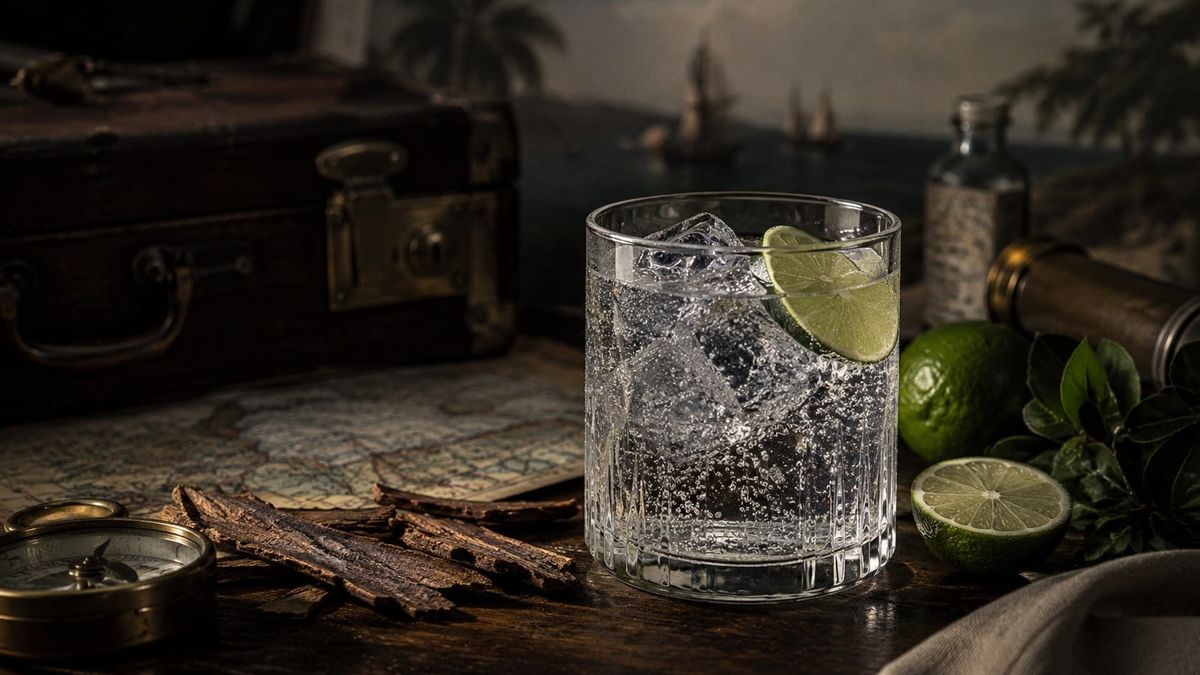
How quinine, malaria, bubbles, sugar, gin, and empire turned bitter medicine into one of the world’s most civilized-looking drinks.
A gin and tonic looks almost too polished for its own origin story.
There it is, sitting in the glass like a person who has never once raised their voice in a hotel lobby. Clear liquid. Ice cubes. A slice of lime. Bubbles rising with quiet ambition. It’s the sort of drink that suggests linen, ocean breeze, ceiling fans, good posture, and someone saying “just the one” in a way that means absolutely not.
It’s clean. Crisp. Civilized. Almost aggressively composed.
Which is ironic, because the gin and tonic’s relatives include malaria, colonial expansion, bitter bark, pharmaceutical improvisation, carbonated water, sugar, military habit, commercial soft drinks, and the deeply human instinct to make unpleasant necessities taste slightly less like punishment.
That’s the gift of a gin and tonic. It presents itself as refreshment, but the glass is carrying something rowdier: bitter medicine, hot climates, British habit, social performance, and the old human urge to make required misery taste like a choice.
In other words, the drink isn’t hiding a secret ingredient. It’s hiding a transformation. One of the world’s most polished cocktails began as a workaround for a disease-haunted world, then learned how to look relaxed about it.
First, the Fever…
To understand the gin and tonic, you have to begin before the gin. Even before the tonic. You have to begin with malaria, which is not a romantic starting point for anything, especially a cocktail.
For centuries, malaria was one of the great practical barriers to life, trade, war, empire, agriculture, and travel in warm, mosquito-heavy regions. Europeans entering tropical and subtropical parts of the world often met an enemy they could neither see nor properly understand. The word “malaria” itself comes from the old idea of “bad air,” because for a long time people associated the disease with marshes and foul atmospheres rather than the true culprit, mosquitoes.
It was an understandable mistake. People saw marshes. People got fevers near marshes. So marshes took the blame, while mosquitoes hovered nearby like tiny criminals with excellent alibis.
The disease could bring fevers, chills, exhaustion, death, and a level of misery difficult to capture in a phrase as simple as “tropical disease.” It dictated where people could live, where armies could move, where colonial powers could operate, and how long outsiders could survive in certain climates.
Before mosquito control, before modern antimalarial drugs, before anyone fully understood the parasite’s life cycle, there was one substance that mattered enormously: quinine.
The Bark…
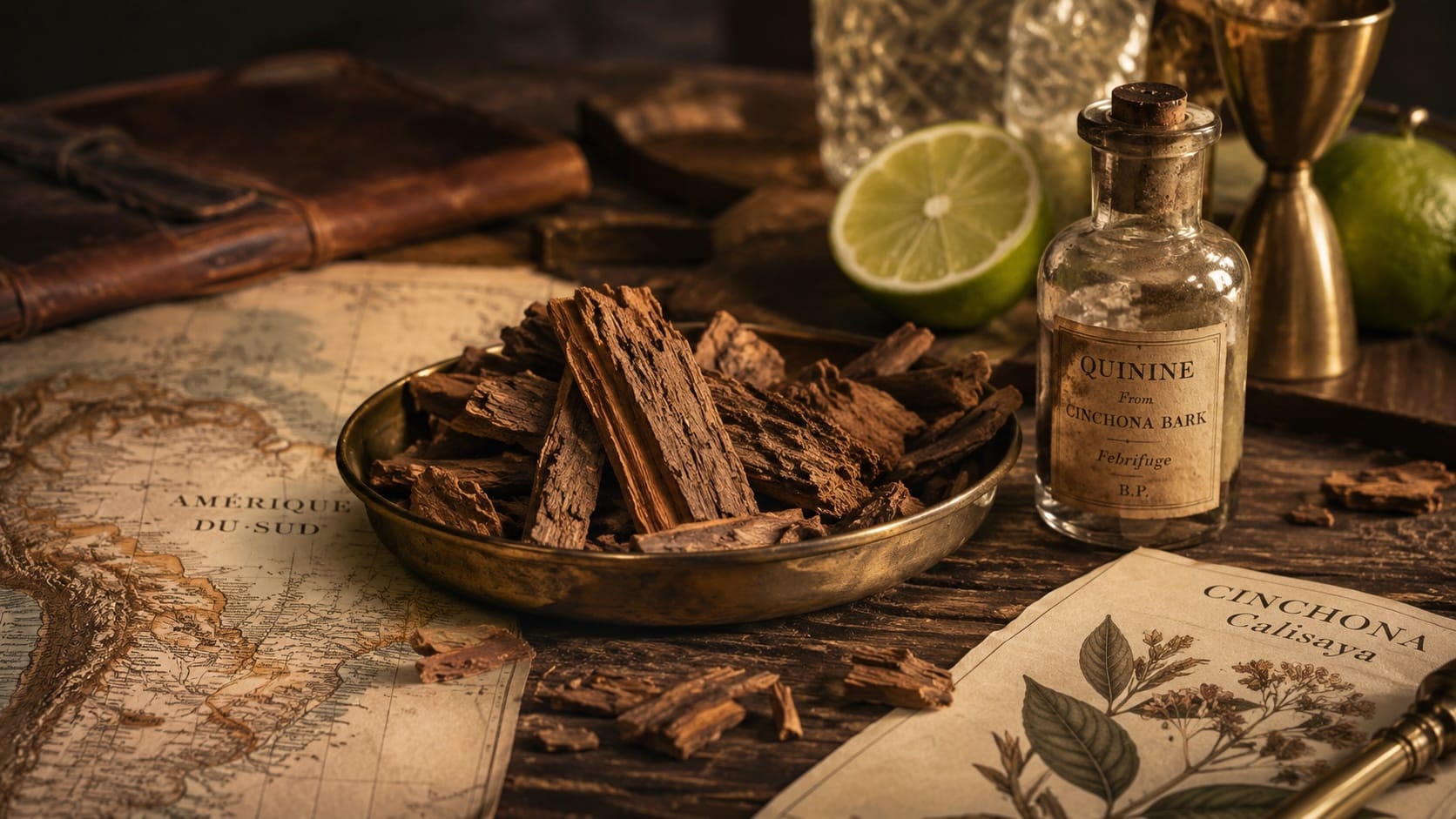
Quinine comes from cinchona, a genus of trees native to the Andes of South America. The bark of some cinchona species contains alkaloids useful against malaria, most famously quinine. Long before it arrived in European medicine, Indigenous knowledge in South America had already recognized the fever-fighting power of the bark. Europeans later “folded” that knowledge into their own medical systems, with all the borrowing, mythmaking, credit-blurring, and imperial convenience that term politely contains.
By the 17th century, cinchona bark, sometimes called Peruvian bark or Jesuit’s bark, was being used in Europe against fevers. It wasn’t always trusted, partly because medicine at the time had a gift for sounding certain while being only occasionally helpful. But cinchona worked in ways many other remedies did not.
The problem was that cinchona bark tasted awful.
Not “interesting.” Not “bracing.” Not “challenging but rewarding,” which is how some adults might describe eating oysters or caviar. It was bitter enough to make your mouth feel personally criticized. It was dried, powdered, mixed into liquids, made into tinctures, and forced into the human body because the alternative was so much worse.
In 1820, French chemists Pierre Joseph Pelletier and Joseph Bienaimé Caventou isolated quinine from cinchona bark. Quinine carries the medicinal quality in cinchona bark, so this helped turn a variable bark remedy into a more standardized medicine. Doctors and administrators could think in terms of doses rather than handfuls of suspicious powder from a tree someone may or may not have identified correctly.
The medicine became more precise, but it didn’t become delicious.
Human beings will tolerate a lot when survival is involved, but we also have a nearly sacred commitment to improving the taste of things we’re required to swallow. This is why children’s medicine is flavored like fake grape, why cough syrup tastes like cherry with a legal department, and why bitter antimalarial compounds eventually found themselves in the company of sugar, bubbles, citrus, and alcohol.
Not because humans are frivolous.
Because humans are practical in extremely theatrical ways.
How Medicine Got Bubbles…
Today, tonic water is so familiar that it’s easy to forget the name is not just decorative. “Tonic” originally belonged to the world of health claims: something meant to strengthen, restore, stimulate, fortify, or otherwise improve you in a way that sounded medically encouraging even when the evidence was bleak to nonexistent.
Tonic water emerged from that world. Quinine, already known for its antimalarial use, met carbonated water, sugar, and flavoring. The result, commercially available tonic water, was patented in Britain in 1858 by Erasmus Bond, owner of Pitt & Co. in Islington. What a name. Erasmus Bond…solidly British.
Early tonic waters were marketed more as digestive or general healthful drinks than as formal malaria medication. In that sense, they lived in the long tradition of products that suggested wellness with great confidence and only partial accountability.
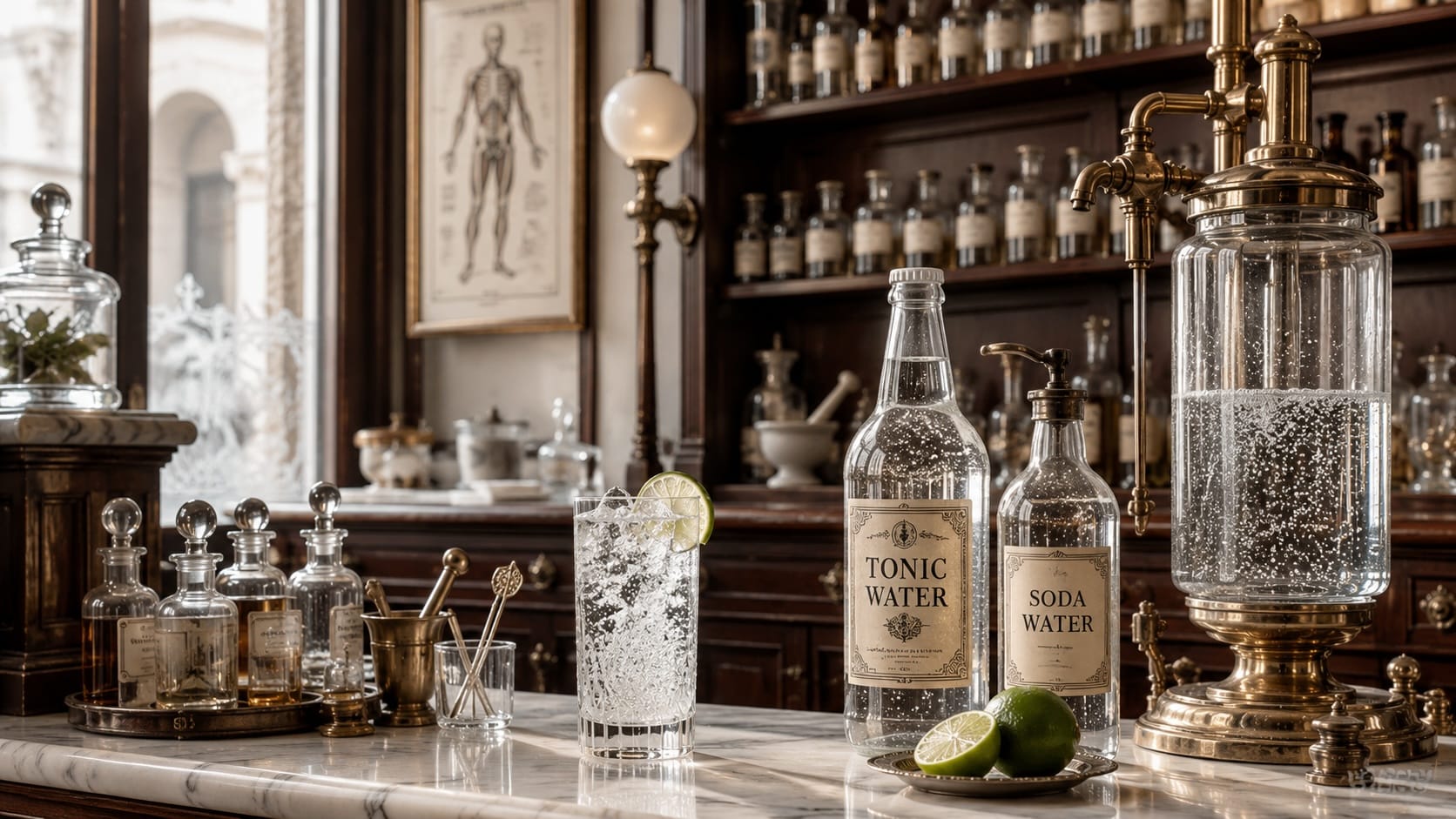
Quinine in meaningful doses was crucial in the history of malaria treatment and prevention. Tonic water contained quinine. British colonial life in India and other malaria-prone regions helped give tonic water a market and a meaning. But that version doesn’t immediately reflect the paperback version: one officer, one sunset, one heroic splash of gin, and suddenly the cocktail appears with its collar starched.
The truthful version is stronger anyway. Quinine and tonic water belonged to a world of medicine, heat, travel, empire, and acclimatization. Alcohol was often used to make medicinal substances more tolerable. Gin was available, culturally familiar to the British, and botanically assertive enough to stand up to bitterness. The drink almost certainly evolved from practical habits and social drinking customs rather than one shining moment of medical invention.
It took shape the way many rituals do: repeated convenience, social approval, and enough time for a workaround cocktail to start looking like it had manners.
Gin Joins the Committee…
Gin had its own complicated history before it ever met tonic. It began with juniper-flavored spirits connected to Dutch genever and British adaptation, and it had already survived one of the more spectacular reputational crises in beverage history: the 18th-century Gin Craze.
If today’s craft gin arrives with tasting notes, a wax seal, and botanicals gathered by someone in a field hat, 18th-century gin arrived more like a public-health problem in a bottle. Cheap gin became so widespread in London that moralists, magistrates, artists, and reformers treated it less like a drink than a civic emergency. William Hogarth’s famous print Gin Lane did not exactly position gin as a premium lifestyle choice.
But by the Victorian era, gin had become more respectable, or at least better behaved in public. British drinking culture certainly had room for gin. Colonial life had room for cold mixed drinks. Tonic water, in a malaria-prone climate, brought bitterness, bubbles, quinine, and a faint medicinal halo. The pairing made perfect sense.
Gin softened tonic. Tonic lengthened gin. Lime brightened the whole thing. Ice, where available, performed its usual miracle: making harsh conditions feel briefly governed by adults.
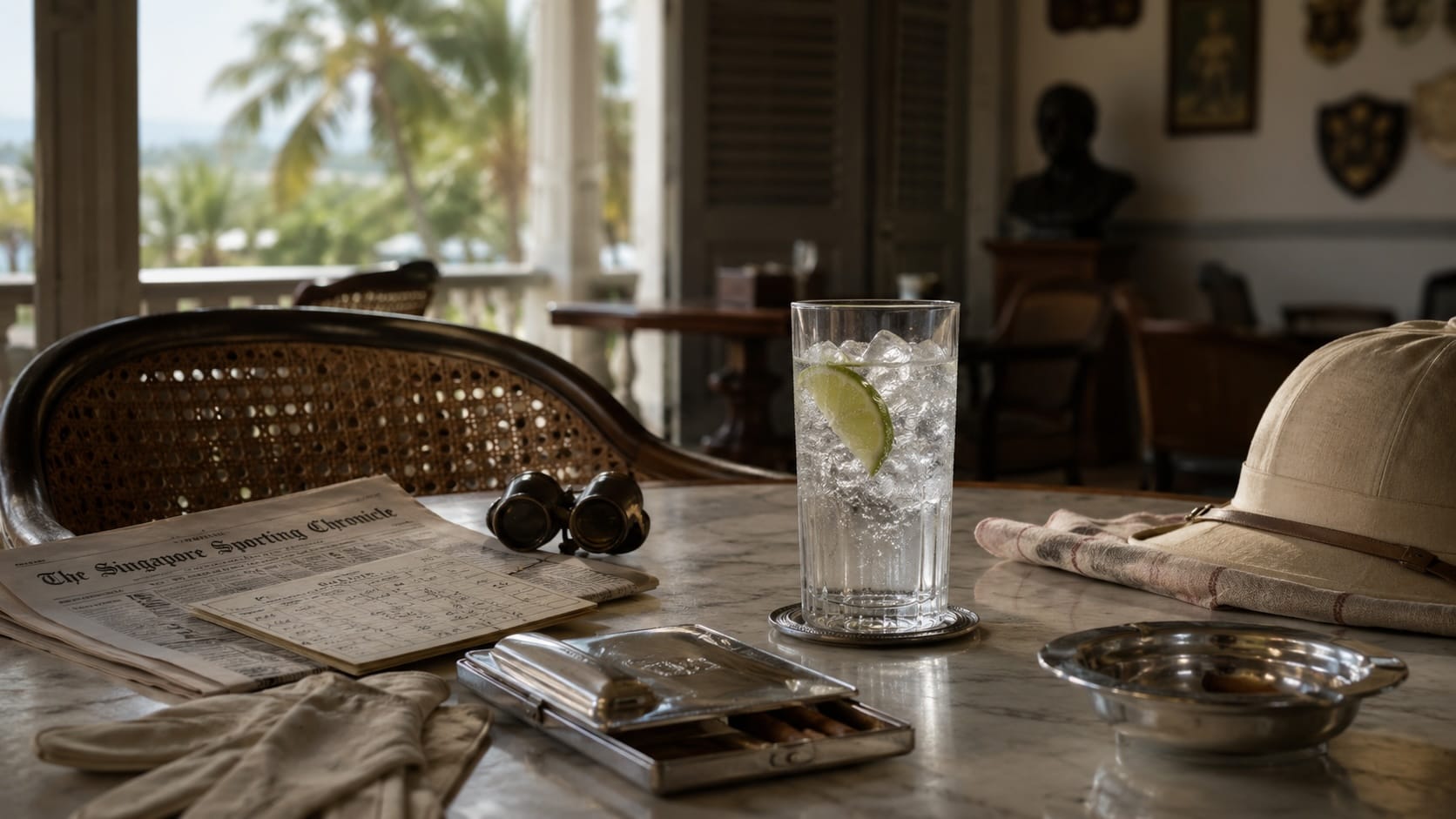
The first known printed reference to “gin and tonic” appears to come from 1868, in the Anglo-Indian Oriental Sporting Magazine. It shows up after a horse race in Lucknow, ordered alongside cheroots, which were short, straight cigars. That early appearance gives the drink a revealing frame: not a solemn medical dose, but a colonial social scene with heat, tobacco, leisure, class, and performance already in the glass.
The Empire in the Ice…
You can’t tell the story of the gin and tonic honestly without the British Empire. You also can’t tell it well by treating empire as scenery, something in the background to make the glass look more dramatic.
The drink is associated with British colonial presence in India and other malaria-prone parts of the empire because quinine mattered gravely to health there. Disease was not a footnote to imperial expansion. It was one of the major constraints on it. Quinine helped Europeans survive in places where malaria had previously made long-term occupation and administration far more dangerous.
That does not make the gin and tonic “the drink that built the empire,” a phrase with the subtlety of a novelty bar sign. Empire was built through violence, commerce, extraction, bureaucracy, military force, disease, law, labor, and appetite. The gin and tonic was not driving the machine. It was more like something sweating men drank near the machine while pretending the machine was normal.
Still, the drink absorbed the atmosphere around it. It carried the taste of quinine, the habits of officers and administrators, the commercial reach of bottled beverages, and the rituals of Britishness abroad. To drink a gin and tonic was not merely to consume alcohol. It was to participate in a performance of composure.
This is one of the stranger things humans do. When life feels dangerous, uncomfortable, or morally complicated, we often build a ritual small enough to hold in our hands. A cup of tea. A folded flag. A champagne bottle against a ship. A glass with ice, lime, gin, and tonic. The ritual doesn’t erase the fear underneath it. It just gives the fear a shape, a rule, and, in this case, a garnish.
The gin and tonic became a way of making heat, bitterness, and unease look orderly.
That may be its most British quality.
When Medicine Became Manners…
Over time, the gin and tonic drifted away from medicine and toward identity.
This happens more often than we think. A thing begins as a practical adaptation. Then it becomes a habit. Then the habit acquires rules. Then the rules acquire status. Eventually people forget the original problem and argue about glassware.
The tonic no longer needed to justify itself as medicine. The gin no longer needed to apologize for London’s 18th-century sins. The drink became refreshment: sharp, cold, bitter, clean. It was good in hot weather. It was easy to order. It looked adult without requiring too much babysitting. Unlike the martini, it did not demand that the drinker appear to be negotiating an arms treaty or raising a pinky.
Even the bitterness changed meaning.
Once, bitterness was the obstacle. It had to be disguised. Sugar helped. Citrus helped. Gin helped. Carbonation helped. But modern drinkers often prize bitterness. We admire amari, Negronis, espresso, dark chocolate, aggressively grown-up salad greens, and other substances that suggest sophistication partly because they taste like we’re overcoming something.
Bitterness became taste.
Taste became culture.
Culture became a person in a nice bar asking about the tonic brand with the gravity of a surgeon requesting a clean instrument.
Here Comes the Garnish…
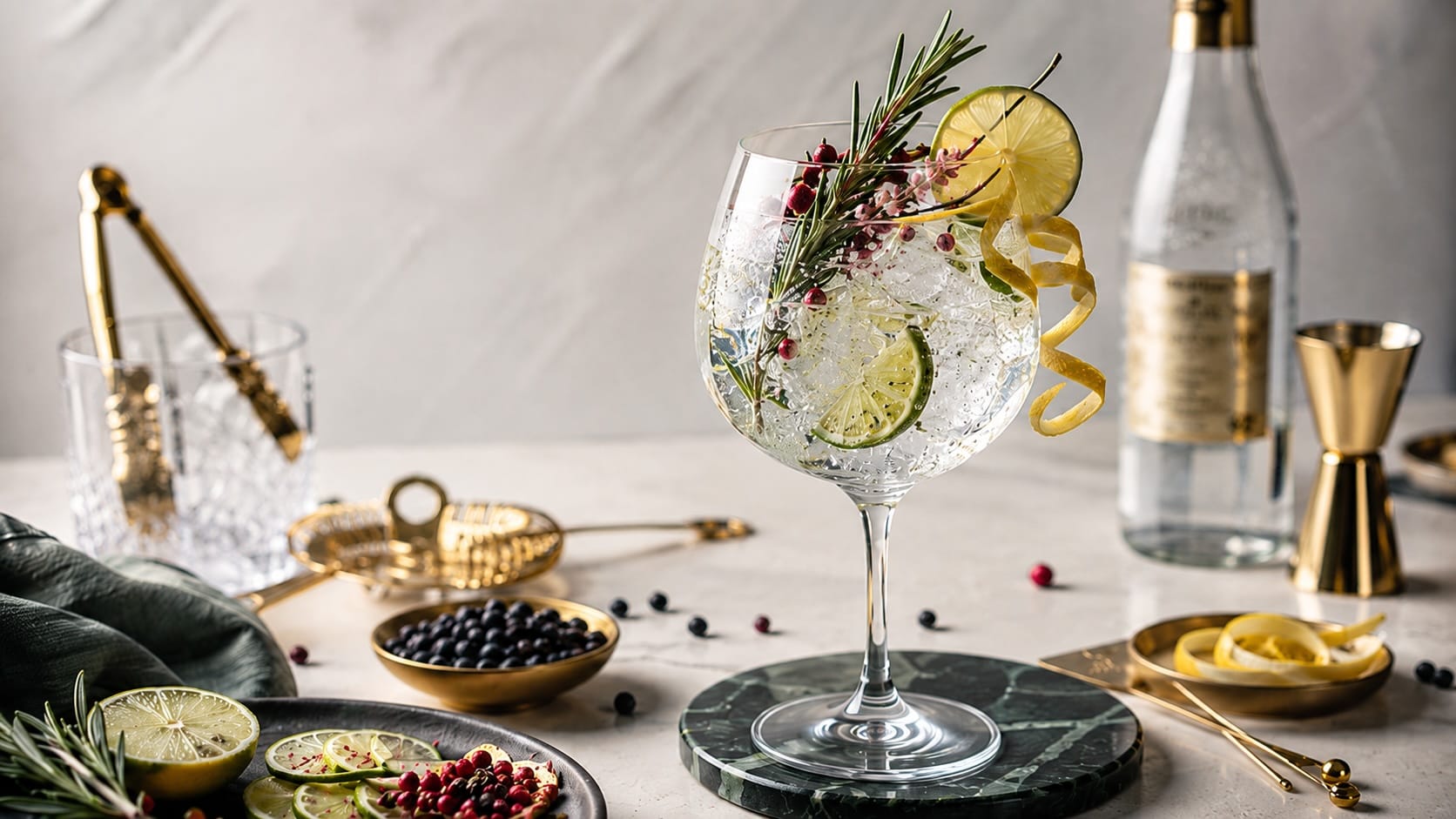
Today’s gin and tonic has become a craft object. The old highball has been redesigned, premiumized, botanicalized, and occasionally made large enough to house a goldfish.
There are small-batch gins with elaborate botanical lists. There are boutique tonics with different quinine profiles, citrus notes, herbs, florals, spices, and carefully managed bitterness. There are Spanish-style balloon glasses, sculptural ice, rosemary sprigs, pink peppercorns, cucumber ribbons, grapefruit peels, edible flowers, and garnishes that look as if they’ve been briefed by an interior designer.
Some of this is genuinely good. A well-made modern gin and tonic can be wonderful: aromatic, bitter, clean, refreshing, and far more complex than the two-ingredient shorthand suggests.
Some of it is also a reminder that humans can turn any simple pleasure into a small unpaid internship.
The funny thing is that modern tonic water contains far less quinine than a historical medicinal dose, and in the United States quinine in carbonated beverages is regulated at low levels. A modern gin and tonic will not prevent malaria. It will not treat malaria. It will not make you medically prepared for the tropics. If your travel health plan is “two G&Ts and confidence,” the mosquito community would like to thank you for your optimism.
The modern drink is not medicine. It is a polished reminder that empire can leave behind rituals long after the original reason has melted into the ice.
The Bitter Thing Under the Lime…
The gin and tonic endures because it does what the best ordinary objects do: it compresses a large story into a small ritual.
A glass of gin and tonic contains botany from South America, medicine from the history of malaria, chemistry from quinine, technology from carbonation, British drinking culture, colonial history, commercial soft-drink development, modern premium branding, and somewhat questionable social enjoyment of bitterness. It is simple only in the way a coin is simple, or a wristwatch is simple, or a barcode is simple. On the surface, it’s doing its best not to alarm you.
What makes the drink interesting is not merely that it began near medicine and became pleasure. That’s only the first turn. The deeper story is that humans are constantly turning discomfort into ritual. We sweeten bitter things. We carbonate them. We put them over ice. We add lime. We make rules. We give the rules cultural meaning. Then, after enough time passes, we forget that the whole thing began because something was hard to swallow.
The gin and tonic is not unique in this. It’s just unusually transparent about it.
A gin and tonic is what happens when history gets dressed for summer and decides not to mention the fever unless asked.
So, the next time one arrives at your table, looking cold and civilized and faintly superior, give it a little credit. It has traveled farther than most cocktails. It has survived medicine, empire, myth, marketing, craft revival, and the garnish industry. It has managed to become elegant without ever fully losing its bitterness.
Which may be the secret.
Source Notes...
These notes are meant to give curious readers an additional trail of reading, not to turn a cocktail essay into a courtroom filing. This piece draws on medical history, botanical history, gin history, cocktail history, and the difference between a good origin story and a cleanly documented one.
Medical and botanical background: For the malaria basics, see the CDC’s About Malaria overview and the World Health Organization’s malaria fact sheet. For the old “bad air” idea behind the word malaria, see the Science History Institute’s Bad Air. For cinchona bark, quinine, and the movement of South American botanical knowledge into European medicine, see Kew’s Just the Tonic: A Natural History of Tonic Water and CDC’s Emerging Infectious Diseases article on cinchona in the Viceroyalty of Peru.
Quinine and the bark: Science Museum Group’s collection note on Pelletier and Caventou’s quinine preparation gives the 1820 isolation details, while ACS/C&EN’s Quinine provides a wider chemistry-history context for the compound, its extraction from cinchona bark, and its later importance to malaria treatment.
Tonic water and the origin story: Kew’s Just the Tonic is the key anchor for the article’s caution around the “British officers invented the G&T as malaria medicine” version. It covers Erasmus Bond’s 1858 patent for tonic water, the early commercial framing of tonic water as a digestive/general tonic, and the 1868 Oriental Sporting Magazine reference generally treated as the first known printed appearance of “gin and tonic.”
Gin before tonic: For gin’s path from Dutch genever to British gin culture, and for the disorderly 18th-century reputation that culminated in the Gin Craze, see Public Domain Review’s Liquid Bewitchment: Gin Drinking in England, 1700–1850. The British Museum and Metropolitan Museum of Art collection pages for William Hogarth’s Gin Lane provide primary visual context for gin’s reputational crisis in 1751.
Modern tonic water: For the modern U.S. regulatory limit on quinine in carbonated beverages, see 21 CFR § 172.575 Quinine in the Electronic Code of Federal Regulations. Modern tonic water carries the flavor and historical echo of quinine, but a modern gin and tonic should not be treated as malaria prevention or treatment.
Optional additional reading: Kim Walker and Mark Nesbitt’s Just the Tonic: A Natural History of Tonic Water is the most directly relevant longer source for a deep dive on cinchona, quinine, tonic water, and the myths attached to the cocktail.
Image note: Images in this article may be AI-generated editorial illustrations created for Detours & Footnotes.