How to Sell the Eiffel Tower
Victor Lustig was never able to sell the Eiffel Tower, but then again, he never intended to in the first place.
How Could You Fall for That...
The Eiffel Tower is an impossible thing to steal, which, for this story’s purpose, makes it a remarkably useful thing to sell.
And, not to mention, nobody should ever be able to “sell” it, either. But, in 1925, that was the whole point.
It was not hidden in a warehouse. It was not sitting behind a gate with a sleepy guard and a bad inventory system. It was 7,300 tons of iron bolted to the Champ de Mars, photographed by tourists, cursed by critics, climbed by crowds, and large enough that if the police needed a description, Paris could simply point upward and smile.
Victor Lustig looked at those details and saw an opportunity. The tower’s size was not a deterrent…it was a distraction.
His buyers, in the story that has survived through newspapers, biographies, and retellings, were not sentimental tourists. They were scrap-metal dealers. The product was not romance, architecture, patriotic feeling, or a slightly overpriced keychain. The product was demolition for profit.
In 1925, Lustig came to Paris and wrapped an impossible offer in the one material that can make almost any absurdity feel practical: official government boredom. There would be confidential letters. There would be government language of the driest possible kind. And there would be a grand hotel meeting, because no one would be fooled in a cheap hotel room.
The tower itself would remain exactly where it was, standing in the middle of Paris and being extremely tall. Lustig worked on the smaller, softer structure he actually intended to move: the buyers in the room.
That was the trick. He didn’t have to hide the Eiffel Tower. He had to make a public monument feel like a private opportunity. A bad con tells the victim to ignore reality. A good one quietly rearranges reality until the victim begins doing some of the construction himself.
Lustig didn’t need anyone to be stupid, though yes, the job would have moved faster. But that would have just been amateur work. He needed them to be ambitious, hurried, flattered, impressed by letterhead, and just cynical enough to believe the government might be doing something faintly ridiculous behind closed doors. In other words, all he needed was a human being with something to gain.
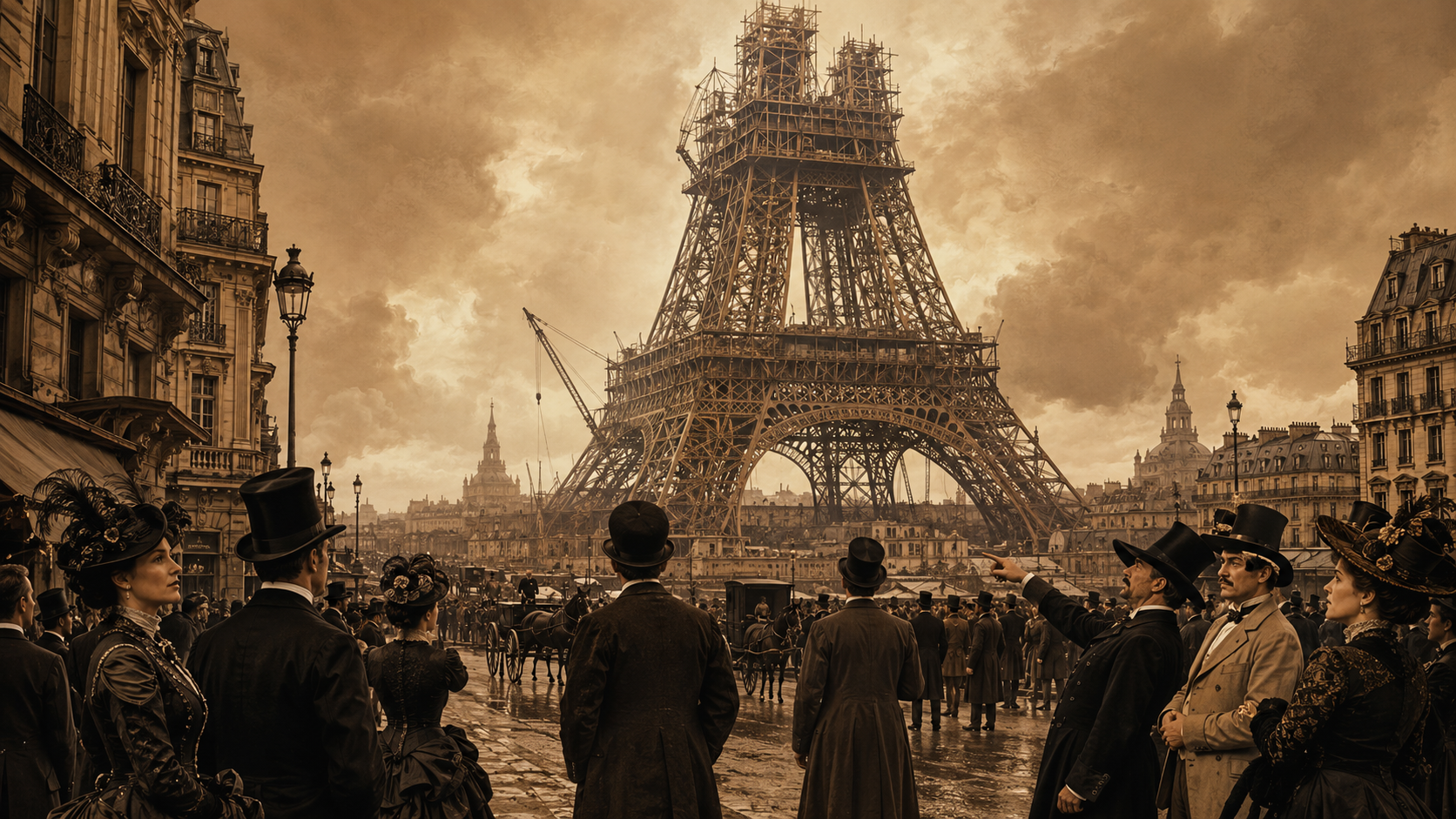
A Monument With a Loose Bolt...
In actuality, Lustig’s lie was, at the very least, slightly believable because the Eiffel Tower had not yet become the untouchable civic icon it is now. Today, it is Paris reduced to a silhouette: photographed, licensed, miniaturized, and sold back to visitors in airport-friendly form. In its early decades, it was much more complicated.