Why We Still Want the Letter
Why Harry Potter’s deepest fantasy was never the wand, the castle, or the spell, but the childhood ache to be recognized.

The most powerful object in Harry Potter is not the wand.
Not the Invisibility Cloak, although handing that to twelve-year-olds would collapse civilization by Tuesday. Not the Marauder's Map, which functions like a charming privacy lawsuit. Not a broomstick, prophecy, Pensieve, cursed diary, or tiny golden ball with wings and a flair for dramatic timing.
The most powerful object is the letter.
That envelope did more than invite Harry to school. It told him the boring version of his life had been incomplete. The green ink, the wax seal, the absurdly specific address, the sense that normal mail had been hiding something from him all along. The letter said: more exists, you belong somewhere else, and please acquire several robes, one wand, and possibly a toad, though the toad remains a questionable strategic choice.
Millions of readers understood the assignment immediately.
They did not merely open the letter with Harry. They wanted one.
That wanting explains more about Harry Potter than any spell. The series became a worldwide phenomenon because the books were funny, scary, clever, and densely imagined. They gave us Quidditch, chocolate frogs, moving staircases, secret passages, bad teachers, good friends, terrifying forests, government incompetence, and a sport where children fly at high speed while iron balls attempt capital murder.
But under all of that lived a deeper fantasy.
Not the fantasy of becoming magical.
The fantasy of being recognized.
The Boy in the Cupboard...
Before Harry becomes a wizard, he is a child who has been badly mislabeled.
The story starts there, not in a castle, battlefield, prophecy room, or enchanted forest. Harry begins in a house so aggressively ordinary it practically files complaints against imagination. The Dursleys love manicured lawns, proper behavior, perfect appearances, and Dudley, who is less a child than a rolling consumer liability.
Harry, meanwhile, is treated like an inconvenience. He wears the wrong clothes. He sleeps in the wrong place. He gets blamed for strange things he cannot explain. He is punished for being different before anyone has given him a language for the difference.
Harry’s situation when we find him is a stoic vehicle that prepares him for what’s next.
Because Harry is introduced to us unwanted, the magic feels less like spectacle and more like a rescue.
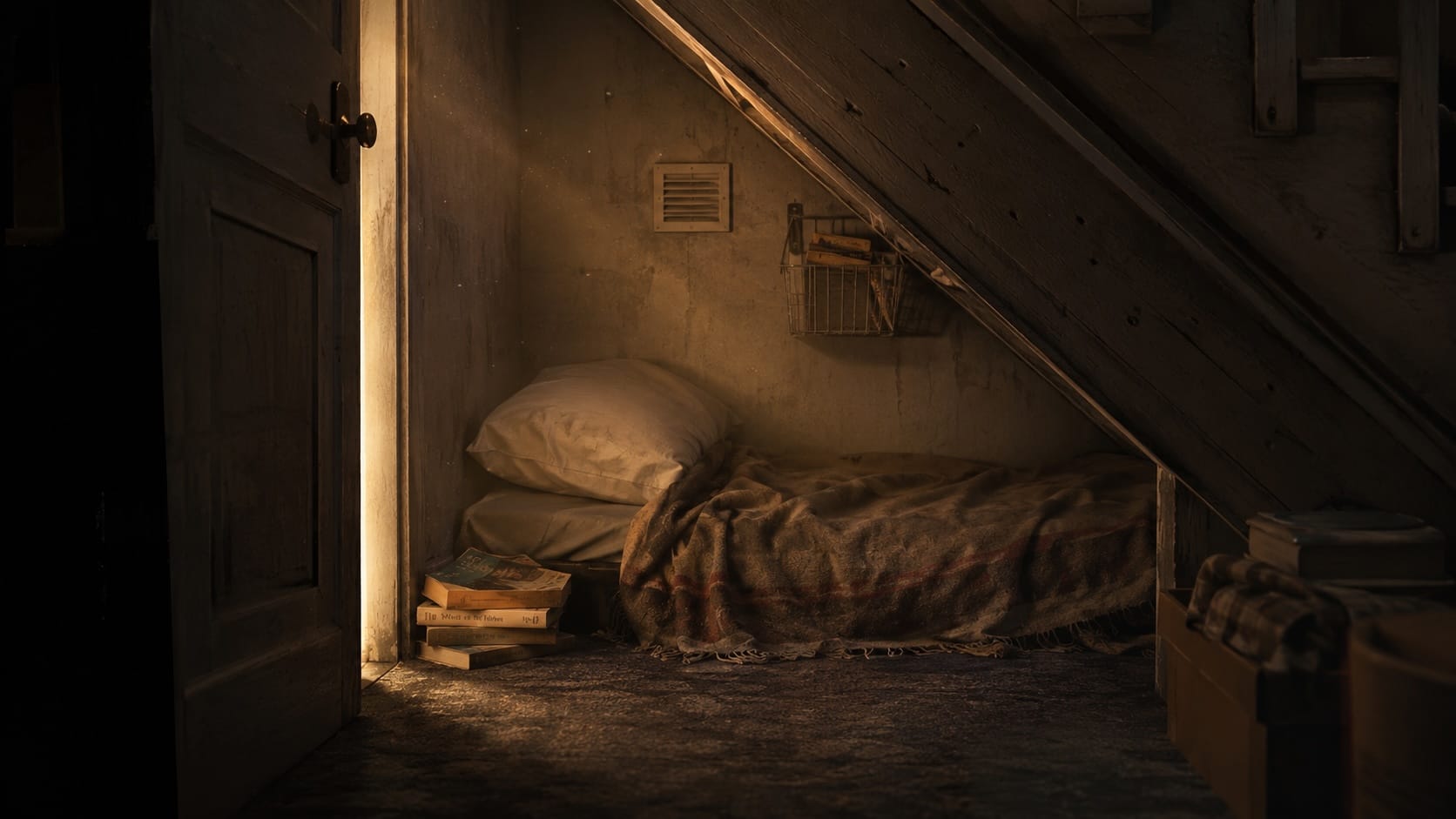
Not every reader had a bedroom under the stairs, mercifully. But almost everyone knows some version of being misread by the room. The quiet kid, the awkward kid, the too-much kid, the not-enough kid, the one who never gets picked first, the one other people decided was only ordinary before given a chance.
Then the letters start coming.
The magic doesn’t begin with supernatural power. It begins with confirmation. Harry does not become a wizard because he waves a wand. He becomes a wizard when someone finally tells him the truth about himself.
The letter doesn’t say, would you like to become interesting? It says, you already are.
No wonder we still want that letter.